
Jerusalem Artichokes
Tubby the tubers. A companion piece to When an Artichoke isn't


Dear all,
Before we get under the skin of Jerusalum Artichokes and another kind of trumpet blowing, I’m delighted to share this post I wrote for Lulu, from Good Food last week.

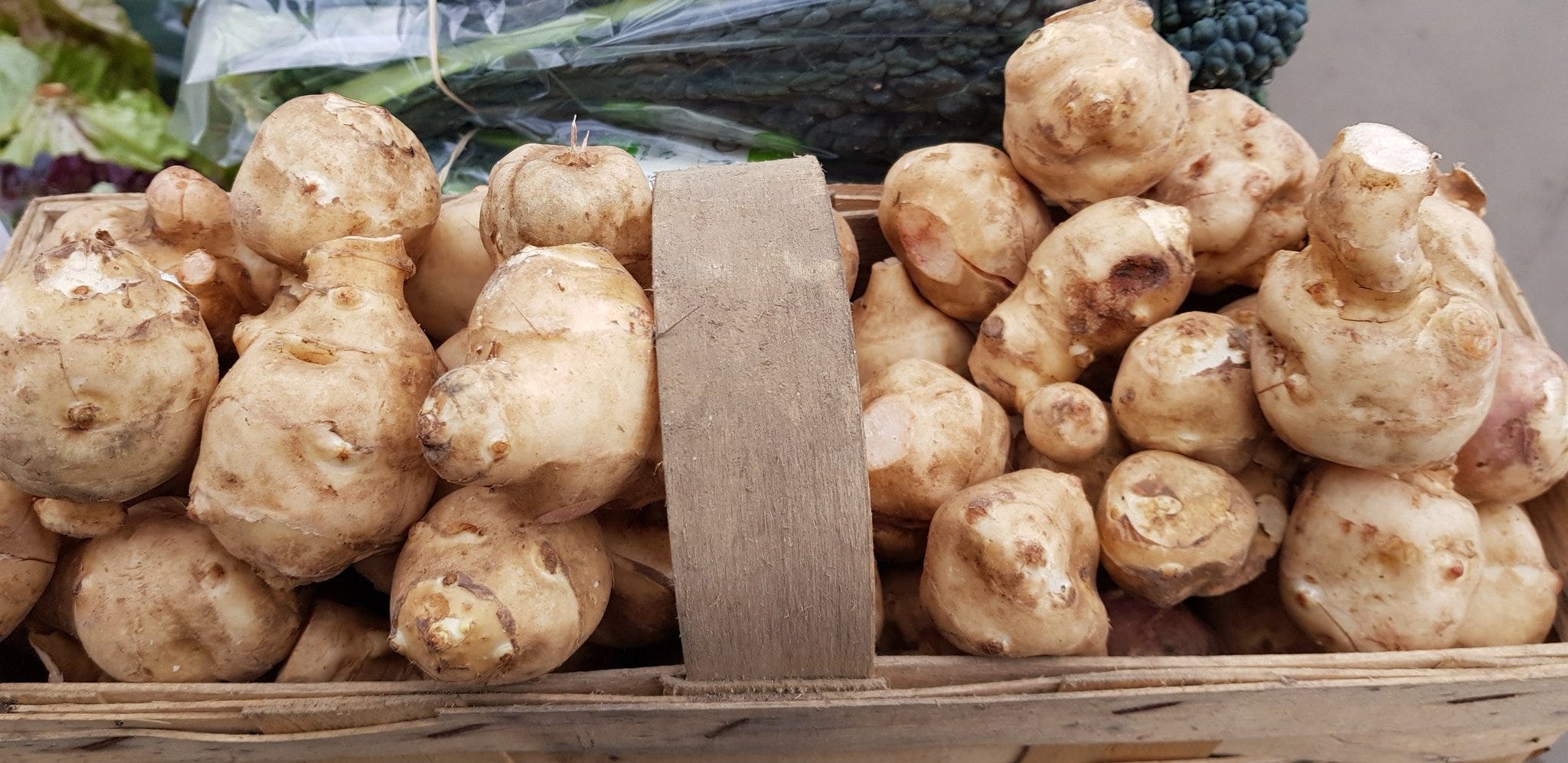
Sulky ginger root like tubers gloat at me from their crate at the farmers’ market, in full swing and season right now and through the winter months. Mostly brown, sometimes beige in colour, occasionally you’ll find purple hewed tubers too. All will have a creamy white flesh that needs acidulating when you cut it to prevent it from turning brown.
There is nothing subtle about the effect of these little stumpy brown bodies despite their underwhelming appearance. Don’t be taken in, Jerusalem Artichokes aren’t delicate little tea lights, they’re barrels of gunpowder waiting around the corner for you to ignite the fuse.
Delicious raw or cooked, as the former they have a nutty flavour and pleasing crunch that works so well, shaved into a winter salad or to give a layer of brittleness to other more subtle and soothing grains and vegetables. Cooked they melt into a caramalised earthy, unctuous sweetness, gorgeous roasted, or mashed, sublime as a soup.
They used to be a pain to prepare, covered with lumps and bumps, a mountain range in miniature that captured every speck of soil and meant that a strong arm, a scrubbing brush and a stern talking to would be needed before the task of peeling the territory began. Recipes had tips on using up Jerusalem artichoke remains. Then new varieties began to appear with edges of their topographic terrain smoothed over. Now it’s possible to peel one without having to start and stop again and again.
When I departed from my last allotment, the JAs stayed in their bed.
It’s a love hate relationship. I love them, they hate me, or at least, I abhor their most notorious and noxious side effect. I’ve warned people; my warnings, like Cassandra have been ignored. How could such an innocent little root be so damaging? Jerusalem Artichokes have a very high inulin content. A prebiotic fibre, inulin is a type of nondigestible carbohydrate known as a fructan. It resists digestion and is fermented by beneficial bacteria in the colon. This leads to excess gas, and stomach cramps especially for those with sensitive stomachs or IBS. If you want to know more about the wonderful and helpful world of inulin I’ve included it as a footnote below1.
Please don’t let me put you off trying them. If you know that they may bite you back, go for a small amount first, mixed with other ingredients. They don’t affect everyone; like padron peppers, Jerusalem artichokes are the Russian roulette of the vegetable world. Or try pickling them. Sources suggest that inulin can be broken down by acid; add lemon juice or vinegar and see if it helps. Some say that cooking them removes the side effects. I would disagree. Cook and eat with lots of other vegetables; you should be fine and it’s possible to build up resistance.
Look online and you’ll find endless recipes, from Escoffier's classic Palestine soup with ground hazelnuts and more often than not, a drizzle of truffle oil, to chips, roasts, warm salads and gratins.
Lets move on from stomachs to entomology and clear up any confusion. Last year I wrote a piece about the difference between artichokes and cardoons and said I’d be returning to Jerusalem artichokes. I like to keep my promises.
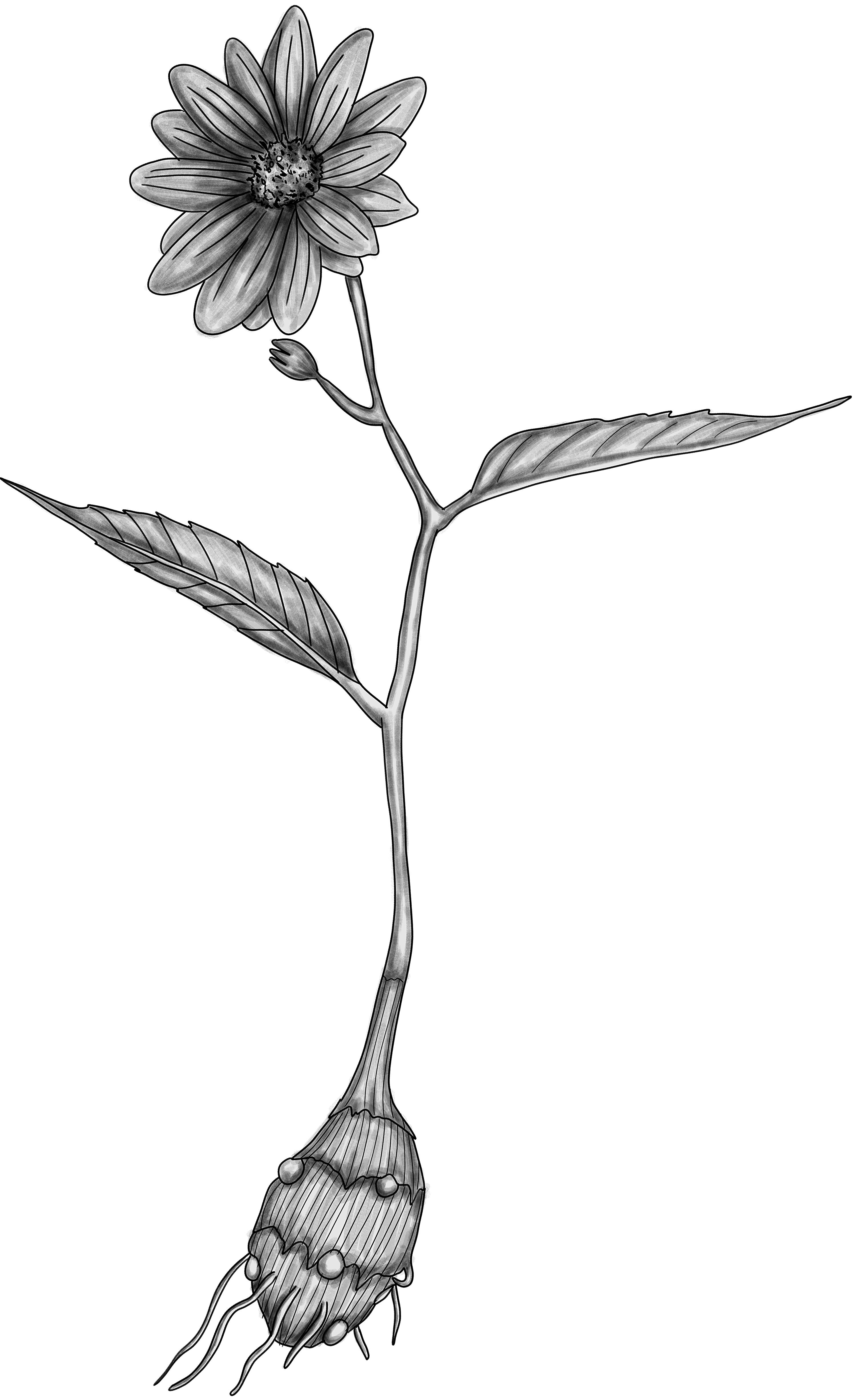
Jerusalem Artichokes, Helianthus tuberosus are not related to globe artichokes or cardoons. They’re part of the sunflower family, the picture at the top shows just how similar their flowers are. Originally from North America, their other names include sunchokes, topinambur, or earth apple. In 1877 American writer Asa Gray wrote that the Native American name for the knobby tuber was kaischuc penauk, meaning “sun roots.”2
No single origin story for the “Jerusalem” name exists.
The first written description of them dates to 1605. Prospect Books quotes Robert May (1660/1685);
The name ‘Virginia’ for the Jerusalem artichoke was due to its American origin. The accepted name Jerusalem, also dating from this period, has proved more popular. It has no connection with the city Jerusalem, but probably owes its origin to the Italian word girasole, which refers to the closely related sunflower. (Robert May, 1660/1685)
By 1660, the Artichock (globe artichoke, Cynara scolymos) had been grown and eaten in England for one hundred years; the unrelated but somewhat similar tasting ‘Virginia’ artichock (Jerusalem artichoke, Helianthus tuberosus), for perhaps only forty years. May does not always say which he means, but the context usually makes this clear, if ‘bottoms’ are taken as applicable to the globe and ‘roots’ to the Jerusalem.
In 1636 Gerard’s Herbal quotes English planter John Goodyer on Jerusalem artichokes:
“which way soever they be dressed and eaten, they stir and cause a filthy loathsome stinking wind within the body, thereby causing the belly to be pained and tormented, and are a meat more fit for swine than men.”
Thomas Jefferson planted them at his home, Monticello in Virginia; the museum states;
In his Notes on the State of Virginia, Jefferson listed the Jerusalem Artichoke as one of the "Esculent," or edible, plants of his beloved state. In 1809, he recorded their planting at Monticello, listing them using the French common name, "Topinambours."
The Jewish Manual—the first kosher cookbook in English, published in 1846 by Lady Judith Montefiore in England—is said to have the first printed recipe for Jerusalem artichokes, appropriately called “Palestine Soup.”3 A year earlier, in 1845, Eliza Acton published her own Palestine Soup recipe and there are references in manuscripts dating to 1834 and 1842
Grow them and you’ll grow them forever; Jerusalem artichokes are perennials and will spread like crazy if you let them but you’ll be rewarded in summer with a glorious spread of beautiful bright flowers and in winter, a crop that is rewarding to harvest as the little tubers are just below the soil surface. It’s a crop that keeps on giving, in more ways than one.
If you’d like to make a contribution to support my writing, tips are welcome
We need fibre; in fact, most of us need far more fibre and less protein than we think. Inulin is a superstar. It’s a prebiotic that supports the growth of beneficial bacteria that reduce gut wall inflammation. Inulin is being used in a study for men with prostate cancer to see if it can reduce side effects. In the form of chicory fibre, inulin has even been touted as a weight loss wonder, comparable in results to weight loss injections.
A study from the University of California, Irvine on liver disease, quoted in The Independent found that ‘‘consuming a type of dietary fibre called inulin, abundant in vegetables, changes the bacteria in the gut to promote the consumption of harmful dietary fructose,” The Independent states that ‘‘The study specifically found that the gut bacterium Bacteroides acidifaciens acts as a key player in helping prevent liver disease when supplemented with inulin.’’
Jerusalem artichokes are not the only vegetable high in inulin. It’s also found in chicory root, leeks, asparagus, garlic and onions, plus wheat flour and bran, barley, and rye. But; Jerusalem artichokes have the highest content. Garlic is pretty high but it would be unusual to serve a dish of garlic cloves.
Onions – 2 to 6g per 100g
Garlic – 9 to 16g per 100g
Leeks – 3 to 10g per 100g
Asparagus – 2 to 3g per 100g
Bananas – 0.3 to 0.5 per 100g
Chicory Root – 15 to 20g per 100g
Jerusalem Artichoke – 16 to 20g per 100g
Wheat and Rye – 1 to 4g per 100g
Tabletmag
Very interesting Cheryl. I hadn’t considered eating them raw. At the restaurant we also found them a nuisance to prepare. However, I found out that a high end restaurant in the States simply washed them then roasted them in their skins. We tried it, a little olive oil and a little salt and they were perfect. Jacket Jerusalems.
I've now got an earworm and am singing "earth apple, earth apple, please be miiiiine" to myself to the tune of Earth Angel...
If you ferment them it helps eliminate the "filthy, loathsome, stinking wind" effect...