
In the deep midwinter
Yule, knocking robins, strawberries in snow, mouse family Borrowers and embracing the darkness night of the year.

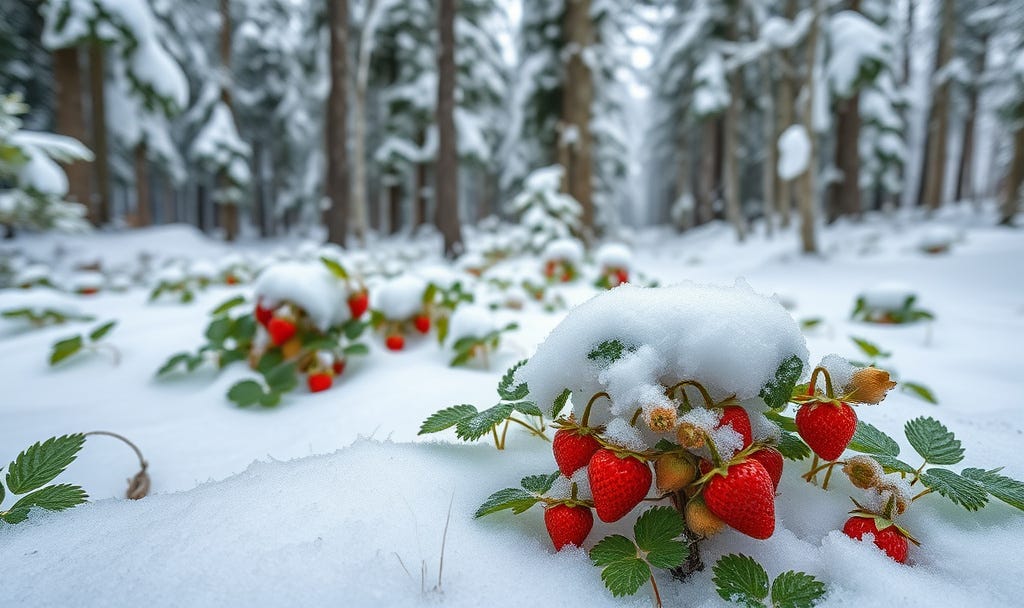
Once upon a time, a poor widower woodsman married for the second time; a hard faced woman who instantly resented the love her husband bore for her step daughter. Her own daughter she indulged and begrudged nothing. To her husbands’ daughter went the leftovers, the old clothes, and a bed by the fire. Covered only in a thin cloak of paper, the girl is sent out into the deathly still, midwinter snow clad forest, tasked to not return without a basket of strawberries. And because she’s so good, she shares her piece of stale bread with an old woman she meets and takes her advice. Walking as directed, she sweeps aside a snowbank and uncovers a patch of strawberries, sweet, red and ripe.
These days, mince pies are more seasonal than strawberries. If this tale had been written recently, the step daughter could have popped into her local supermarket and found strawberries in December; they’re no longer a delicacy and stepmother would have had to think of another way to kill her stepdaughter. In the original fairy tale, the girl is sent out three times in a blizzard and is aided by the months of the year.
Snow as a comfort blanket, protecting and warming the earth and any sleeping plants and seeds; this is the memory that remained with me the longest from this tale. Always being polite to old women in forests. And trusting in nature to bring us food in season.
I wanted to know what it was like to hibernate, slowing down my heart, sleeping through the coldest and darkest months. Emerging in spring as the snow melts to trickle down to waiting thirsty roots. Watching for the tiny green shoots that miraculously appear, pushing their way through the soil, the minuscule Davids throwing their weight against the rich brown Goliath loam. I still can’t hibernate, but I’m more than happy to embrace the colder, darker days and nights and reach for a blanket.
These days I’m more likely to think about the story of the goddess Demeter and her daughter Persephone, to explain the cycle of the seasons. Persephone, abducted by Hades with the approval of Zeus, and taken to live in the dark recesses of the underworld. Demeter, goddess of agriculture and harvests, walking the earth, searching for her lost daughter. In her mourning and rage causing famine and starvation. No crops would grow, no food to feed the people until her daughter was free; the only time a god or goddess got the better of Zeus. And in the deep cold winter months whilst Persephone is with Hades, the soil sleeps, readying itself for a time in spring when the sun will warm it. To revive over wintered crops, receive new seeds, new planting, new growth. Our word cereal comes directly from Demeter’s Roman name; Ceres.
In reality, if farmers can grow winter crops, they will, especially if they have polytunnels and greenhouses but it becomes slower, more difficult with less daylight and a drop in temperature. Days when the sunshine looks as if it’s been strained through muslin. It’s a time for planning, maintenance, and preparing for spring.

If you’re reading this in the northern hemisphere; as I’m publishing this, it’s the day after Winter Solstice, the shortest day, the longest night. The rebirth of light and the return of the sun. A time of renewal and contemplation. Solstice means sun standing still. The image of the sun embedded in time, stillness within the fire.
Dylan Thomas’s poem Do not go gentle into that good night; ‘Rage against the dying of the light’ comes to mind.
Whilst he was writing about death, it makes me think how a little light can drive away the dark. For the Jewish festival of light, Chanukah candles are lit over the course of eight nights, increasing the number of candles and dispelling the darkness. It’s the last night this evening. More than ever, we need to move from the darkness into the compassionate light.
Lia Leendertz has shared a meditative winter spiral in this post
In the early morning insomnia loaded dark before shadows and bird song, I make a pot of tea without turning on the light, enjoying the stillness, watching for signs of red on the horizon. In summer fresh lemon verbenna leaves are my infusion of choice. In winter, soft smoky roasted barley tea, (boricha in Korean, mugicha in Japan) is consoling. The sound of water poured into a teapot has to be one of the most comforting in the world as long as I don’t burn myself in the attempt. In Wendell Berry’s words;
’’To go in the dark with a light is to know the light.
To know the dark, go dark. Go without sight,
and find that the dark, too, blooms and sings.’’
I’ve been searching online for the answer to this question;
How to prevent a robin from banging into a window?
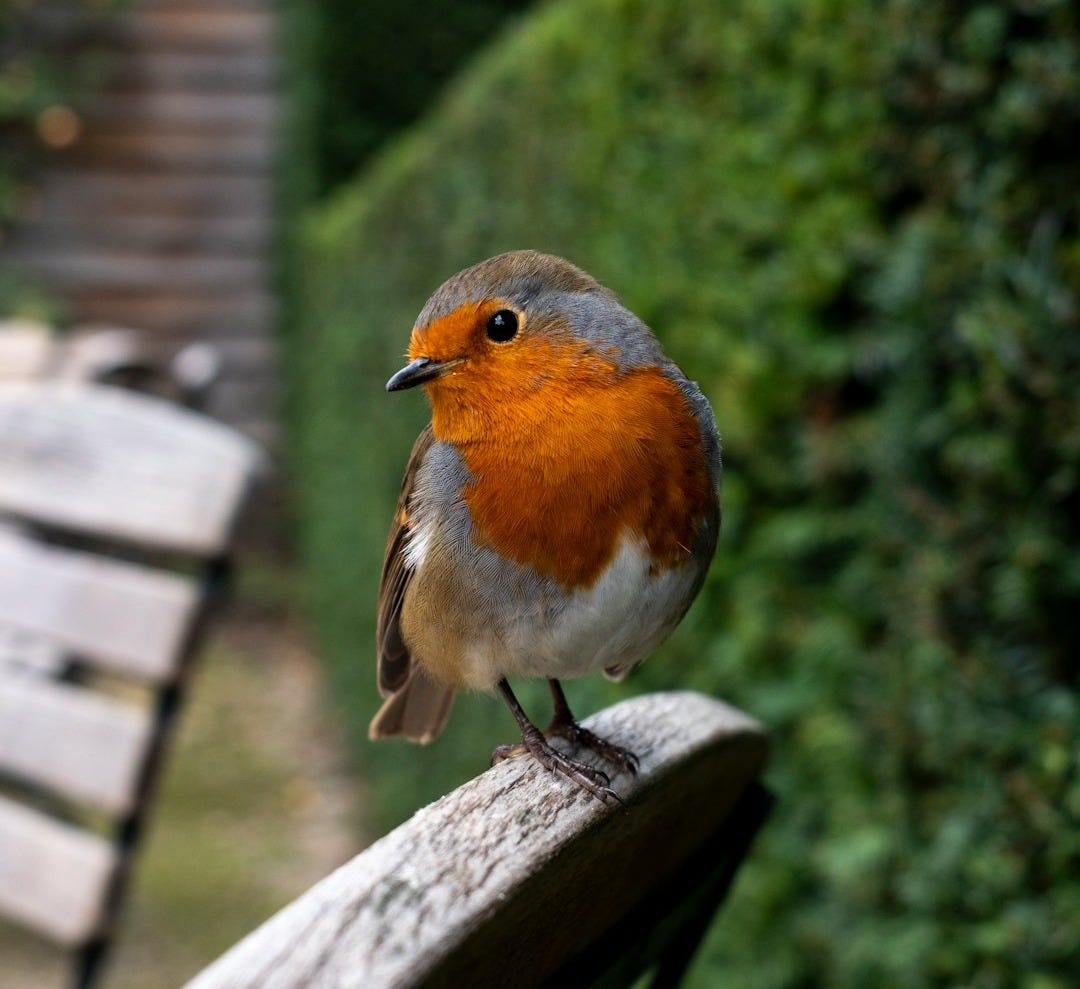
Every day, a robin has been on my balcony, searching for food, and with each appearance, it’s banged into my living room window. The first time it happened, the noise was so loud I went to answer the door. Now I know it’s probably seen its reflection and thinks it’s fighting off a rival. Robins are feisty little things and fiercely protective of their patch .Either that or it’s telling me how hungry it is, and wants feeding, something I can’t do easily as I live close to a river where rodents abound. Or I can take it as a sign; robins represent new beginnings, renewal, optimism. And this fellow is optimistic I’m going to feed him.
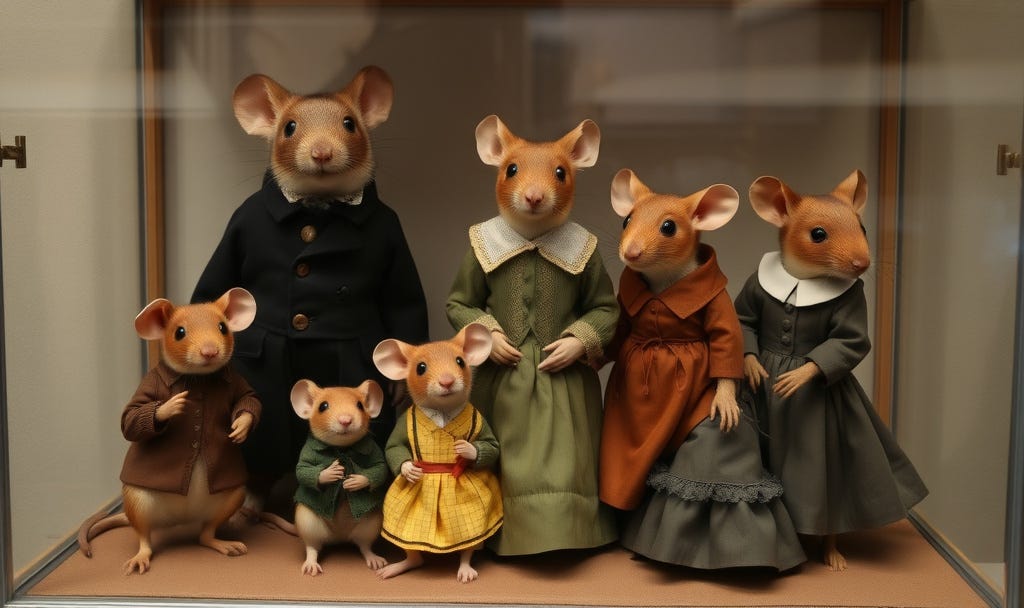
Putting out food for birds makes the local rodent population think their luck is in. Today, listening to music on my bluetooth speaker, I noticed a Whatsapp voice message from my mother. Nothing but silence when I played it and then suddenly; loud rustling & knocking noises from my sideboard. A mouse? I’d not seen or heard any rodents for a long time. And as much as I love the tale of Sally Gurteen’s Agnes Stuffington, I’m loathe to have her companions moving in. I’m imagining the family unpacking their belongings; a rodent Borrowers menage, stuffing duvets, fluffing pillows, locating the kettle to make a pot of tea. Now I’m really panicking. The noise gets louder, accompanied by bangings, like anxious meeces smashing into my Midwinter plates. Far too loud for a mouse. Could it be...a rat? A rat couple? Has an extended rat family put the word out that living in my sideboard amongst the china would be far more acceptable than a damp riverside hole? I bravely thumped on the door. The noise continued. Then the rodent family, obviously making themselves comfortable, turned on the radio and spoke in my dads voice...hang on a second.
That voice message I couldn’t hear. My speaker. And breath. Honestly.
Christmas is coming, the goose is getting fat. That goose isn’t getting any fatter, it’s met it’s maker.
Farmers with Christmas poultry don’t get any rest until all their birds are prepared for market. Many won’t know if all their birds are sold until the last minute. They’ve had a frenzy of sleepless nights to get all your orders ready. No hibernating for them. And the same goes for all our farmers getting your Christmas dinner ready for market, harvesting your Brussels Sprouts, potatoes and parsnips in the rain and mud. It’s too easy to forget that the food we eat comes from farmers, not hypermarkets, supermarkets and shops.
This is the last post of the year; thank you so much for reading, sharing, liking, commenting. It’s my absolute pleasure to be here on Substack and I look forward to being with you again in 2026. Happy New Year!
If you’re able to support my writing please do consider upgrading to a paid subscription.
Or the tip jar is here if you’d like to make a seasonal contribution
Lovely, Cheryl, thank you - and Merry Christmas
Absolutely beautiful writing, Cheryl. I just quoted that Wendell Barry poem in my last post too; it’s lovely, isn’t it, and so appropriate for the Solstice.
Wishing you a restful break and I look forward to reading more from you in the New Year.